

How Regular Mock Tests Improve Confidence and Exam Performance

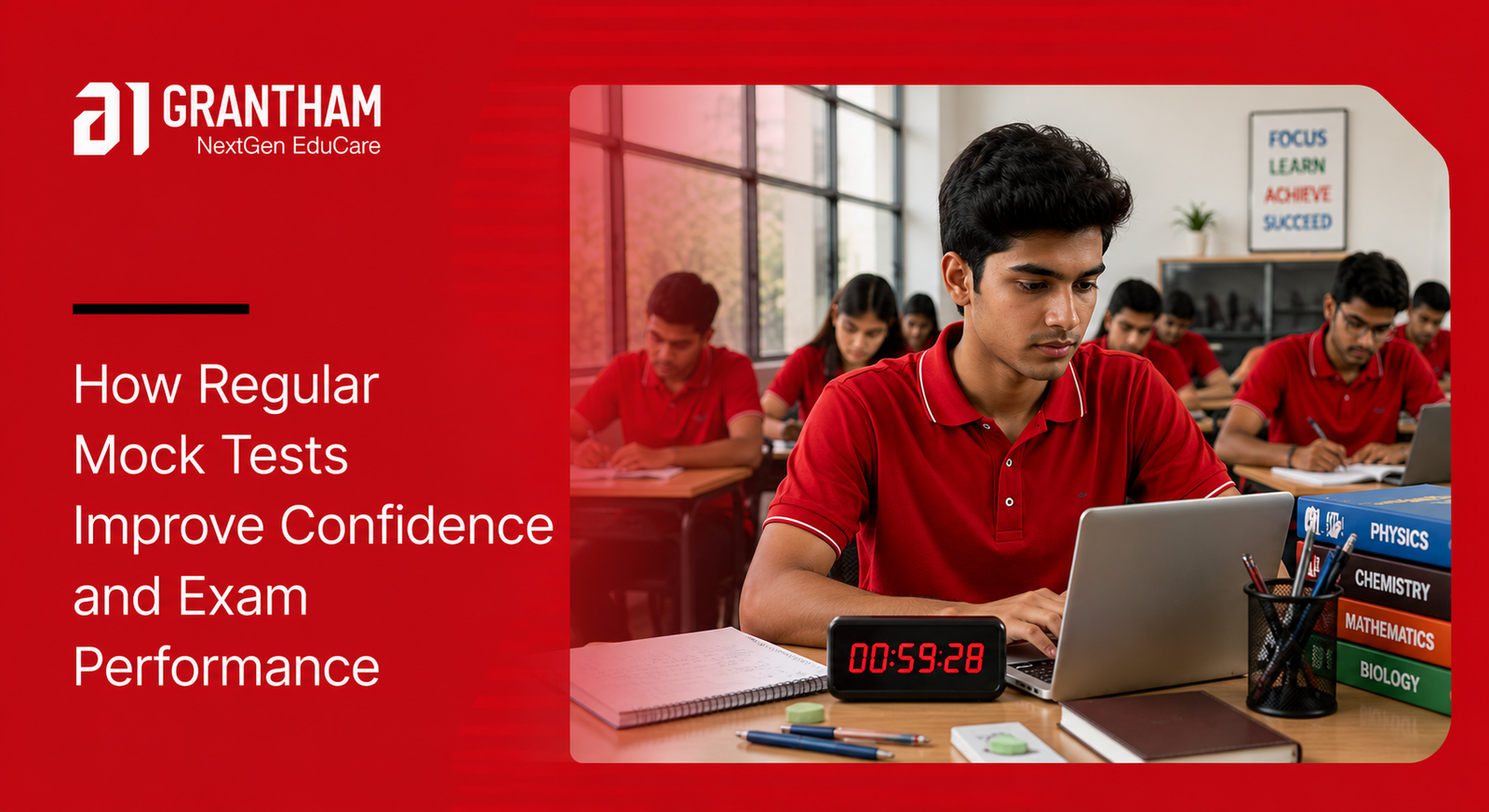
Preparing for a competitive exam is about much more than completing the syllabus. While understanding concepts is essential, success often depends on how effectively students apply their knowledge under exam conditions. This is where regular mock tests become an invaluable part of any preparation strategy.
Many students spend months studying but still struggle on the actual exam day because they are unfamiliar with time pressure, question patterns, or performance management. Incorporating mock tests for competitive exams into a study routine helps bridge this gap by providing a realistic examination experience while highlighting areas that need improvement.
Whether you’re preparing for engineering entrance examinations or medical admissions, regular practice through mock tests builds exam confidence, strengthens time management skills, and supports smarter preparation.
Why Mock Tests Matter
Competitive examinations assess more than subject knowledge. They evaluate accuracy, speed, decision-making, concentration, and the ability to perform under pressure.
Mock tests recreate these conditions in a structured environment, allowing students to experience the demands of the actual examination before the final day. Instead of treating every test as a judgment of ability, students can use each attempt as a valuable learning opportunity.
Mock tests are not simply assessment tools — they are practice opportunities that help students prepare for both the academic and psychological demands of competitive examinations.
How Mock Tests for Competitive Exams Build Stronger Preparation
Regular mock tests for competitive exams provide insights that textbooks and classroom lessons alone cannot offer. By simulating real examination conditions, students become familiar with question patterns, time limits, and decision-making strategies while developing greater confidence with each attempt.

01Familiarity with Exam Pattern
Students gain a clear understanding of question formats, marking schemes, and time allocation.
02Better Time Management
Repeated practice teaches students how to distribute time effectively across different sections.
03Reduced Exam Anxiety
Experiencing realistic exam conditions multiple times helps students feel calmer on the actual day.
04Improved Decision-Making
Students learn when to attempt tough questions, when to move on, and how to minimize mistakes.
A large review of classroom studies found that practice tests both boost achievement and reduce test anxiety, which lines up closely with what students report after a few rounds of mock testing.
The Importance of Practice Papers
Alongside mock tests, practice papers play an equally important role in reinforcing learning. Practice papers allow students to revise concepts, strengthen subject knowledge, and identify weak areas before attempting full-length examinations. They also encourage regular revision without the pressure of formal testing.
01Concept Reinforcement
Repeated exposure to different question types strengthens understanding and improves long-term retention.
02Gradual Skill Development
Students can focus on specific subjects or topics before progressing to complete mock examinations.
03Increased Accuracy
Regular practice reduces common calculation errors and builds confidence with similar questions.
Combining practice papers with mock tests creates a balanced preparation strategy that supports both learning and performance — the same layered approach behind our study routine blueprint for NEET and JEE aspirants.
Don’t measure a mock test by score alone
The lessons you learn from reviewing your mistakes often contribute more to long-term improvement than the marks themselves.
Building Exam Confidence Through Consistent Practice
Confidence is rarely built overnight. It develops gradually as students become familiar with the examination process and recognize steady improvement in their performance.
Regular mock tests expose students to different levels of difficulty, helping them remain composed even when faced with unfamiliar questions. Over time, this repeated exposure reduces uncertainty and encourages a more focused approach during the actual examination.
Students who consistently practise under realistic conditions often approach competitive exams with greater clarity, improved concentration, and stronger self-belief. Rather than fearing the examination, they learn to view it as another opportunity to apply the skills they have already practised.
Performance Analysis: Turning Every Test Into a Learning Opportunity
Taking a mock test is only the first step. The real improvement begins when students carefully review their performance. A detailed performance analysis helps identify patterns, strengths, and areas that need additional attention, making future study sessions more focused and productive.
Instead of concentrating only on scores, students should evaluate why mistakes occurred — lack of concept clarity, poor time management, calculation errors, or misreading the question. Finding these answers allows students to make meaningful improvements before the next test.

A mock test becomes valuable only when it is followed by honest performance analysis and targeted improvement.
The Importance of NEET Mock Tests
Medical entrance examinations demand conceptual clarity, speed, and exceptional accuracy. Regular NEET mock tests help students become familiar with the examination format while strengthening their ability to perform under pressure.
By solving full-length tests regularly, students learn to balance Biology, Chemistry, and Physics efficiently without allowing one section to affect the others. Consistent testing also helps students improve confidence, reduce exam-day anxiety, and develop a disciplined revision schedule — the same discipline covered in our guide on how to prepare for the NEET exam.
How Mock Tests Strengthen a JEE Preparation Strategy
Engineering entrance examinations require analytical thinking and effective time management. An effective JEE preparation strategy includes regular mock tests alongside concept revision and problem-solving practice.
Mock examinations expose students to a variety of question types while helping them determine the most efficient order for attempting different sections. Over time, students learn to make quicker decisions, avoid spending excessive time on difficult questions, and maintain concentration throughout the examination — a skill that also carries over directly into MHT-CET maths strategy for students attempting both exams.
Research on test anxiety backs this up: repeated timed practice trains the memory system to stay calmer under exam-like pressure, which is exactly the state students need walking into JEE or NEET.
Common Mistakes Students Should Avoid
Even students who regularly attempt mock tests may not experience significant improvement if they overlook important aspects of preparation.
What actually works
- Reviewing every test, right or wrong
- Reading value into a low score too
- Attempting difficult questions in practice
- Testing on a consistent schedule
What derails progress
- Taking tests without reviewing them
- Focusing only on the score
- Skipping difficult questions in practice
- Inconsistent, occasional testing
Developing the habit of learning from every mock examination leads to more steady and measurable academic progress.
Key Takeaways
- Mock tests for competitive exams prepare students for real examination conditions.
- Regular practice builds exam confidence by reducing anxiety and improving familiarity with the test format.
- Practice papers strengthen conceptual understanding and improve problem-solving skills.
- Performance analysis helps students identify weaknesses and create focused study plans.
- NEET mock tests and a structured JEE preparation strategy become more effective when supported by consistent testing and thoughtful review.
Conclusion
Success in competitive examinations depends on more than completing the syllabus. Students must also learn how to manage time, maintain accuracy, stay focused under pressure, and apply their knowledge effectively during the examination. Regular mock tests provide an opportunity to develop these essential skills in a realistic and structured environment.
When combined with practice papers, detailed performance analysis, and disciplined revision, mock tests for competitive exams become powerful learning tools rather than simple assessments. They help students understand their strengths, overcome weaknesses, and approach examination day with greater confidence.
Whether preparing through NEET mock tests or following a comprehensive JEE preparation strategy, consistent practice and thoughtful review remain among the most effective ways to improve both exam confidence and overall academic performance — the same principle behind knowing the difference between NEET and JEE preparation tracks before committing to one. Every mock test is another step toward becoming a better-prepared and more confident candidate.
Ready to See Where You Actually Stand?
Book a free mock test with Grantham NextGen Educare and get a detailed, section-wise performance analysis.
Book a Free Consultation →FAQs
1. Why are mock tests for competitive exams important?
Mock tests help students experience real exam conditions, improve time management, build confidence, and identify areas that require additional preparation.
2. How often should students take mock tests?
The frequency depends on the stage of preparation, but regular testing combined with proper review is generally more effective than taking occasional tests.
3. How do mock tests improve exam confidence?
Repeated exposure to exam-like conditions reduces anxiety, improves familiarity with question patterns, and helps students approach examinations with greater confidence.
4. Why is performance analysis important after a mock test?
Performance analysis helps students identify mistakes, understand weak areas, improve time management, and develop more effective study strategies.
5. Are practice papers different from mock tests?
Yes. Practice papers usually focus on topic-wise revision, while mock tests simulate the complete examination experience with time limits and full-length question papers.