

The Science of Concentration: How to Stay Focused While Studying

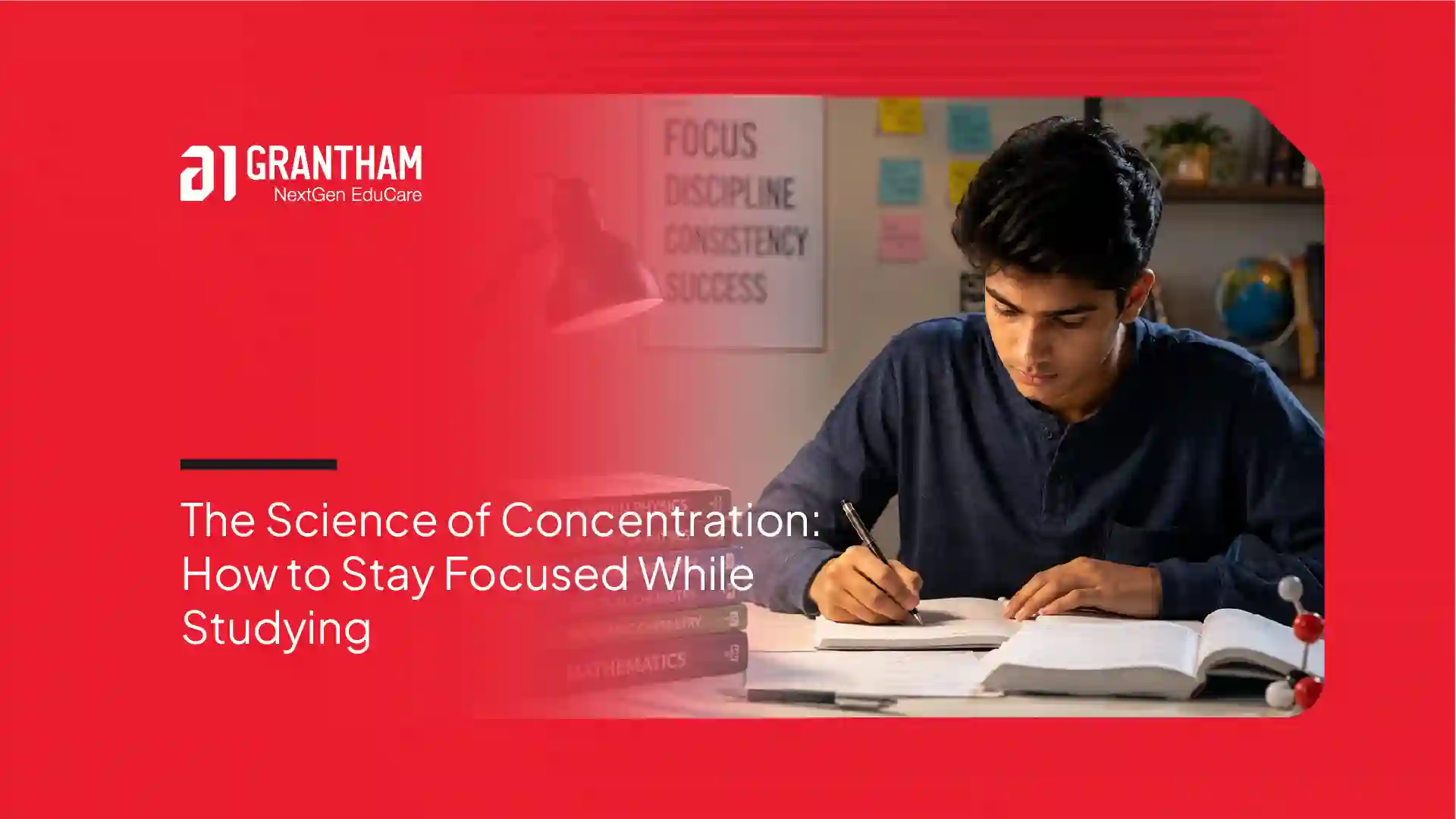
The Science of Concentration: How to Stay Focused While Studying
Concentration is often mistaken for willpower. In reality, it’s a trainable skill shaped by attention, memory, motivation, sleep, and environment — here’s the science behind it and the habits that actually build it.
Every student has experienced it. You sit down with the best intentions, open your textbook, arrange your notes neatly, and promise yourself that the next two hours will be incredibly productive. Five minutes later, you are checking a notification, wondering what is in the refrigerator, or suddenly remembering a task that seemed completely unimportant until the moment you started studying.
Concentration is often mistaken for willpower. In reality, it is a complex mental process influenced by attention, memory, motivation, sleep, environment, and even nutrition.
The encouraging news is that focus is not simply an inborn talent. It is a skill that can be strengthened through consistent habits and scientifically supported strategies.
Understanding how to stay focused while studying is not about finding a magical shortcut. It is about creating conditions that allow your brain to perform at its best while reducing the distractions that compete for your attention.
This article explores the science behind concentration and offers practical techniques that students can use to build stronger focus, study more effectively, and retain information with greater confidence.

Understanding How Concentration Works
Concentration is the brain’s ability to direct attention toward one task while filtering out competing information.
Although this sounds straightforward, the human brain constantly processes countless sights, sounds, thoughts, and emotions. Remaining focused requires the brain to decide which information deserves attention and which should be ignored.
This process relies heavily on the prefrontal cortex, the area responsible for planning, decision-making, and self-control.
The more distractions your brain must manage, the harder it becomes to sustain attention for long periods.
Learning how to stay focused while studying therefore begins with understanding that concentration is limited. Like physical energy, it needs to be managed wisely.
Why Students Lose Focus So Easily
Before improving concentration, it helps to understand what weakens it.
01Digital Distractions
Smartphones, social media, instant messaging, and constant notifications compete for attention throughout the day. Even brief interruptions can significantly reduce concentration because the brain needs time to return fully to the original task. Repeated switching between studying and digital distractions increases mental fatigue while reducing learning efficiency.
02Mental Overload
Students often attempt to absorb large amounts of information without allowing sufficient time for processing. As cognitive load increases, attention naturally declines. Trying to study continuously for several hours without meaningful breaks usually produces diminishing returns.
03Stress and Anxiety
Examination pressure, academic expectations, and personal concerns consume mental resources. When the brain remains preoccupied with stress, concentrating on new information becomes considerably more difficult.
Create an Environment That Supports Focus
One of the simplest ways to improve concentration is by designing an environment that reduces unnecessary distractions.
Keep Your Study Space Organized
Visual clutter competes for attention. A clean, organized desk allows the brain to focus more easily on the task at hand. Keep only essential study materials within reach. Everything else can wait.
Reduce Digital Interruptions
A major part of distraction-free studying involves managing technology intentionally. Simple steps include:
- Turning off unnecessary notifications
- Placing the phone out of reach
- Closing unrelated browser tabs
- Using website blockers during study sessions
These small adjustments reduce the temptation to interrupt your own concentration.
Use Scientifically Supported Study Sessions
The brain performs best when concentration alternates with recovery.
Study in Focused Time Blocks
Rather than studying continuously for several hours, divide learning into structured sessions. Many students benefit from studying for approximately 25 to 50 minutes followed by a short break. These intervals help maintain mental freshness while preventing cognitive fatigue.
Give Your Brain Time to Recover
Breaks should involve genuine rest rather than immediately switching to another mentally demanding activity. Stretching, walking briefly, drinking water, or simply looking away from screens allows attention to recover.
Quality Matters More Than Duration
Three highly focused study sessions often produce better learning outcomes than six distracted hours spent staring at open books.
Build Effective Study Habits
Strong concentration depends heavily on routine. Developing effective study habits reduces the amount of mental effort required to begin studying each day.
Study at Consistent Times
The brain responds well to predictable schedules. Studying at similar times each day gradually conditions the mind to enter a focused state more easily. Consistency often reduces procrastination.
Set Specific Goals
Vague objectives such as “study biology” provide little direction. Instead, define measurable goals like:
- Complete Chapter 4 notes
- Solve twenty mathematics problems
- Revise one history unit
- Memorize fifteen vocabulary terms
Clear objectives help maintain attention throughout the session.
Concentration Techniques for Students That Actually Work
Scientific research supports several practical methods for strengthening focus. Independent reviews of retrieval-based learning research confirm that actively recalling information is one of the most reliable ways to strengthen memory.
01Active Recall
Instead of repeatedly reading information, challenge yourself to remember it without looking at your notes. Retrieving information strengthens memory more effectively than passive review. This remains one of the most effective concentration techniques for students.
02Spaced Repetition
Review information over increasing intervals rather than attempting to memorize everything in one session. Repeated exposure strengthens long-term retention while reducing mental overload.
03Teach What You Learn
Explaining concepts aloud forces the brain to organize information logically. If you cannot explain a topic clearly, you probably need further review.
04Write Before You Highlight
Many students highlight nearly every sentence. Writing summaries in your own words requires deeper thinking and encourages stronger concentration.
Support Your Brain Through Healthy Habits
Concentration extends beyond the study desk. Daily lifestyle choices significantly influence attention and learning capacity.
Prioritize Sleep
Sleep supports memory consolidation and cognitive performance. Students who sacrifice sleep for additional study hours often experience reduced concentration the following day. A well-rested brain learns more efficiently than an exhausted one.
Stay Physically Active
Regular exercise improves blood circulation and supports brain function. Even short periods of physical activity can improve alertness and attention.
Eat Balanced Meals
The brain requires a steady supply of nutrients to function effectively. Skipping meals or relying entirely on sugary snacks often leads to energy fluctuations that reduce concentration.
Hydration Matters
Even mild dehydration may negatively affect attention and mental performance. Keeping water nearby during study sessions is a surprisingly simple but valuable habit.

How to Improve Focus While Studying During Exams
Examination periods create additional challenges. Pressure often increases distractions rather than reducing them.
Break Large Tasks Into Smaller Sections
Large chapters can feel overwhelming. Dividing material into manageable sections creates a sense of progress and reduces anxiety.
Avoid Multitasking
Students sometimes believe they can revise while messaging friends or watching videos. Research consistently shows that multitasking reduces learning efficiency. Completing one task before beginning another remains one of the best ways to improve focus while studying.
Accept Imperfection
Waiting for perfect motivation often leads to procrastination. Beginning imperfectly is almost always better than waiting indefinitely for the ideal moment.
Maintaining Long-Term Concentration
Building concentration resembles building physical fitness. Progress develops gradually through repeated practice. Some study sessions will naturally feel easier than others. The objective is consistency rather than perfection.
Over time, students who practice focused study routines often notice improvements in:
Small daily improvements accumulate into meaningful long-term results.
Conclusion
Learning how to stay focused while studying is not about relying on extraordinary self-discipline or avoiding every distraction forever. It is about understanding how the brain functions and creating habits that support sustained attention.
By applying practical concentration techniques for students, reducing interruptions through distraction-free studying, adopting effective study habits, and using proven study concentration tips, students can strengthen both focus and learning efficiency. Simple strategies such as studying in structured sessions, maintaining healthy routines, setting clear goals, and practicing active recall can make a significant difference over time.
Concentration is not a fixed ability that some students possess and others lack. It is a skill that develops through consistent practice, thoughtful planning, and patience.
The more intentionally you train your attention, the easier it becomes to stay engaged, retain information, and approach every study session with greater confidence. A structured, concept-first learning system can make building these habits considerably easier, since students spend less energy figuring out what to study next and more energy actually concentrating.
Build Stronger Focus With a Structured System
See how Grantham NextGen Educare’s concept-first, small-batch approach helps students concentrate, retain more, and study with confidence.
Book a Free Trial Class →FAQs
1. How can I stay focused while studying for long hours?
Study in focused sessions with short breaks, eliminate distractions, stay hydrated, and avoid multitasking to maintain concentration over longer periods.
2. What are the best concentration techniques for students?
Active recall, spaced repetition, goal setting, structured study sessions, and regular revision are among the most effective techniques.
3. How can I improve focus while studying at home?
Create a quiet study space, keep your desk organized, limit phone use, and follow a consistent daily study schedule.
4. Why do I lose concentration so quickly while studying?
Common reasons include digital distractions, lack of sleep, stress, mental fatigue, and studying without clear objectives.
5. What are some effective study habits for better concentration?
Maintaining a routine, setting specific goals, reviewing information regularly, getting enough sleep, and taking planned breaks all contribute to stronger concentration. If you’d like personalized guidance, you can always get in touch with our team.